
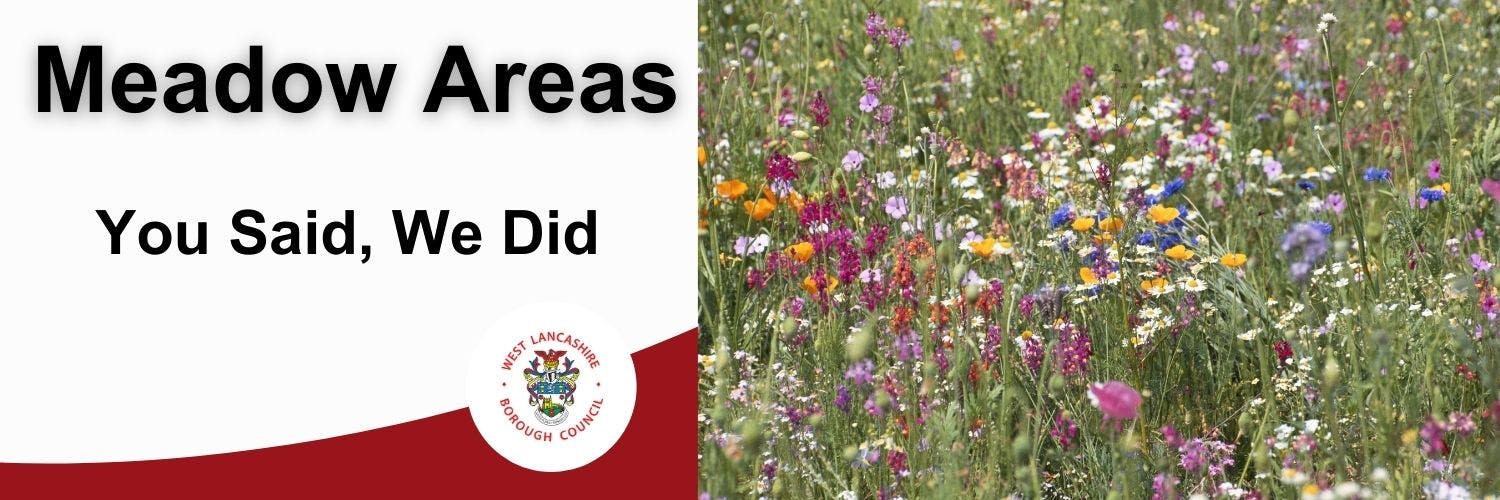
Meadows Areas
Thank you for sharing your views!
As part of our pledge to make West Lancashire Borough Council carbon neutral by 2030, and reduce our impact on the environment and support biodiversity, we invited residents of the Borough to have their say on how some of our green spaces across the Borough are maintained.
In November 2021, residents were asked to give their feedback on 26 sites identified to receive reduced mowing to allow natural meadows to grown, and encourage natural flora and wildlife to flourish.
You can read about the survey here.
-
You Said
Share You Said on Facebook Share You Said on X (formerly Twitter) Share You Said on Linkedin Email You Said linkA total of 174 residents participated in the survey, thank you to everyone who shared their views with us.
Overwhelmingly 93% of participants said they liked the idea of having meadow areas across the Borough.
96% said they would like to see spaces dedicated to pollinators, small mammals, and wildflowers.
90% agreed or strongly agreed with the Councils approach to biodiversity.
85% of participants agreed with all the proposed locations.
Comments received about the project where overwhelmingly positive, here are a few from our residents:

-
We Did
Share We Did on Facebook Share We Did on X (formerly Twitter) Share We Did on Linkedin Email We Did linkWe listened!
Based on the feedback and views of our residents we made adjustments to two of the proposed sites; Spencer's Lane in Skelmersdale and West End in Ormskirk. The changes we made ensured the local community can continue to enjoy the sites for recreational purposes.
Since we started the project, the sites were left uncut between March and the end of September, except for a small border which was mown around each site. This allows the flowers to set seed and ensures that the meadow provides the greatest benefit to wildlife.
Wildflower meadows vary from one site to another and usually contain a variety of native grasses and wildflowers. Wildflowers are mostly native perennial species, which return and flower each year.
Here are some of the flowers we have seen across the sites, these flowers are great pollinators for bees and butterflies and provide food source and shelter for insects and small mammals. Many of them also improve soil quality.

What happens next?
At the end of the season, all sites will be cut with specialist mowing equipment, and the cuttings will be removed. This will help to lower the richness of the soil and create the low-nutrient ground that our native wildflowers and grasses need to thrive.
To find out more about the meadows and hear from Councillor Neil Furey; Lead Member for Clean and Green, click here.
Thank you for supporting local biodiversity!